
"As a non-binary person, I was barred from my baby's birth certificate - it was heart-breaking"
How a case of every-day discrimination led to state-wide change for LGBTQ+ parents

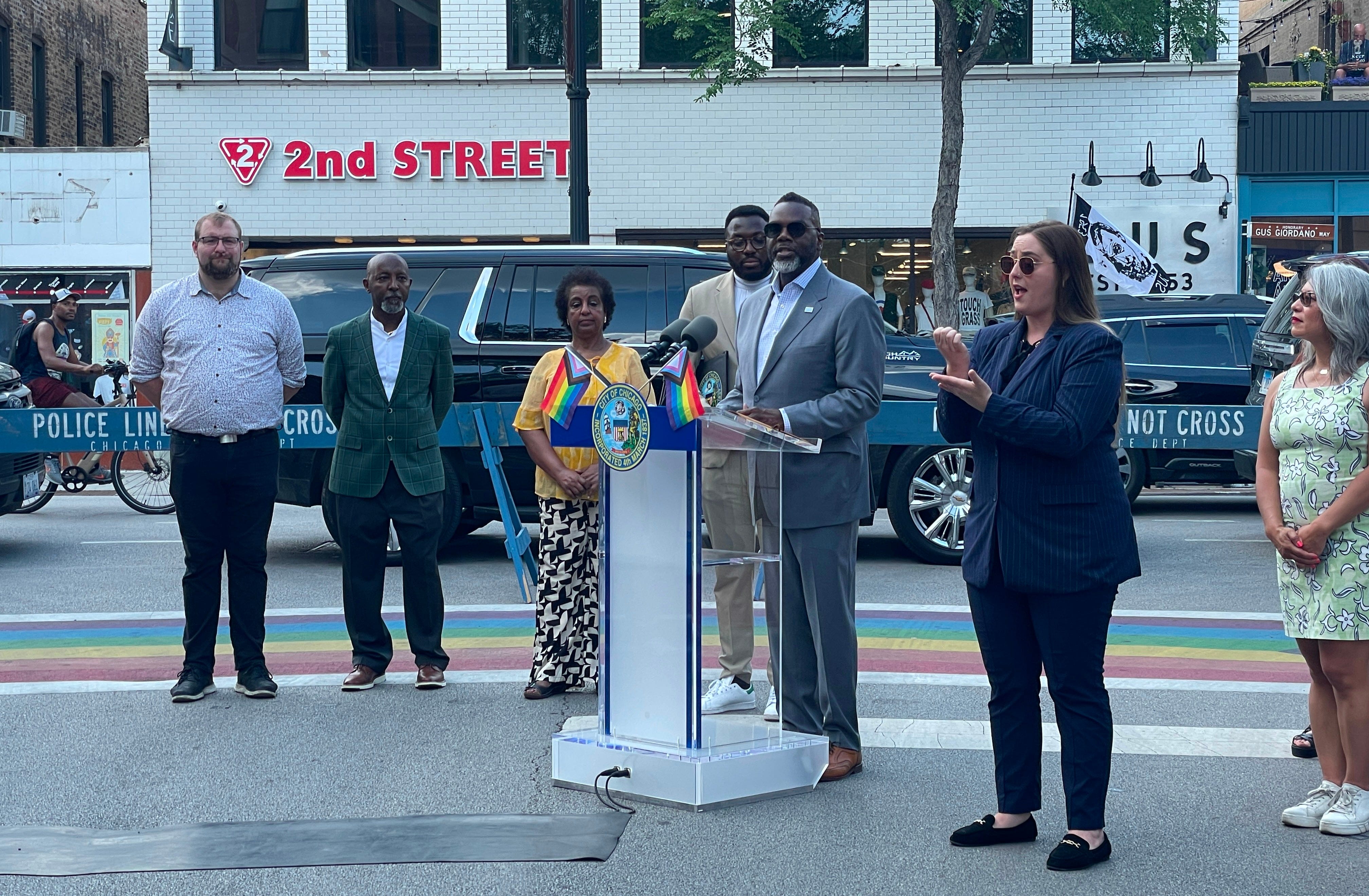
It’s a sultry June morning in Chicago. Steaming hot air ascends from the tarmac on North Clark Street, where Chicago mayor Brandon Johnson is giving a short address to Andersonville residents.
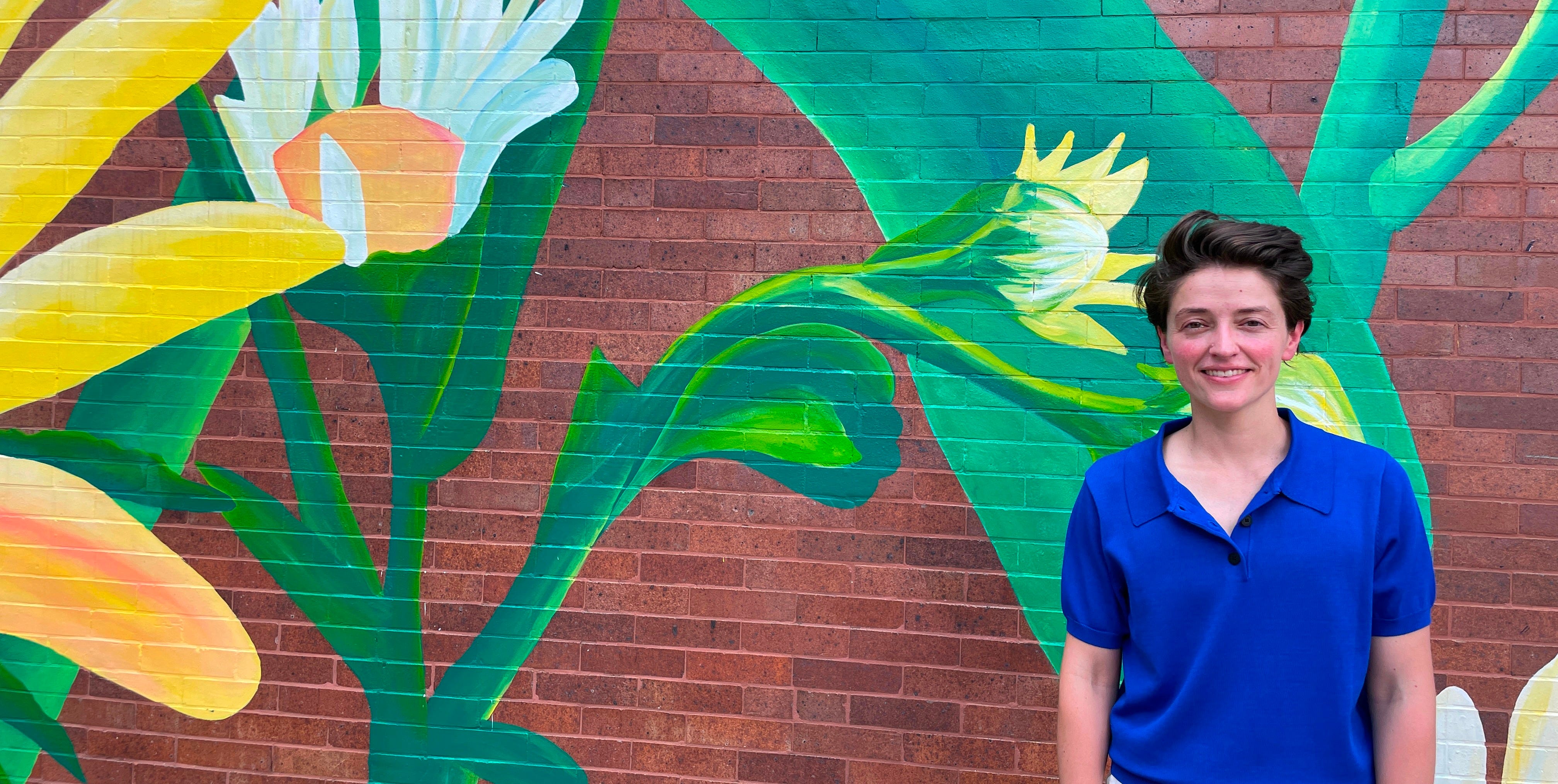
Among them is director and founder of Chicago Therapy Collective, Iggy Ladden, whose parental hurdle — at a time in which you’re supposed to cry only tears of joy — led to real change for their fellow Illinois residents.
“I was barred from my baby's birth certificate as a non-binary person, and that was a very heart-breaking experience,” they begin. “It didn't even register to me at the time that it was discrimination. I was just like, ‘oh, this is what happens’.”
“We're starting to secure our place within the broader LGBTQ community, and ensure trans folks are always at the centre of the conversation.”
Chicago is a bright beacon when it comes to trans advocacy. Among the city’s trans-led organisation are Life is Work, led by trans pioneer Zahara Bassett, Brave Space Alliance, and Chicago Therapy Collective (CTC). The latter focuses on alleviating health (mental and physical) disparities within the Queer community.
“It’s taken us eight years to get to the point where we have now trans-focused, trans-led organisations”, Ladden says, “we're still developing as a movement of trans-led groups in our advocacy efforts, but we're starting to secure our place within the broader LGBTQ community, and ensure that trans folks are always at the centre of the conversation.”
Change at state level
Ladden’s counselling background led them to establish CTC with a strong LGBTQ foundation since the very beginning, back in 2018. Being the collective’s leader has put them in the “right rooms at the right time”, they admit, but they have used that privilege to create a conversation.
“I had the privilege to share my experience being excluded from my child’s birth certficate with Chicago’s governor [JB Pritzker] at one of the charity’s events.”
“Fast forward two years, Illinois has just passed a bill called Equality for Every Family, which modernises all of our parentage, adoption and surrogacy laws to ensure that there's no discrimination against queer people and second parents.”
Many will see this as yet another example of the “city of broad shoulders” providing for its communities, but it’s hard to forget the rampant inequality still affecting Chicago today.
Still: the city, and the wider state of Illinois, seem to have managed to hold the fort when it comes to political players.
“It helps that we have really powerful broader LGBTQ+ organisations like Center on Halsted, Howard Brown Health […], and lots of community council members and few legislators identify as queer”, including the first openly gay senator Mike Simmons.
“Illinois has just passed a bill called Equality for Every Family, which modernises all of our parentage, adoption and surrogacy laws to ensure that there's no discrimination against queer people and second parents.”
In your backyard
When Ladden first moved to Chicago, there was a lot of talk about “Boystown”, as Northalsted was historically known, as the centre of Q+ community and nightlife. Not much transpired about the other LGBTQ realities.
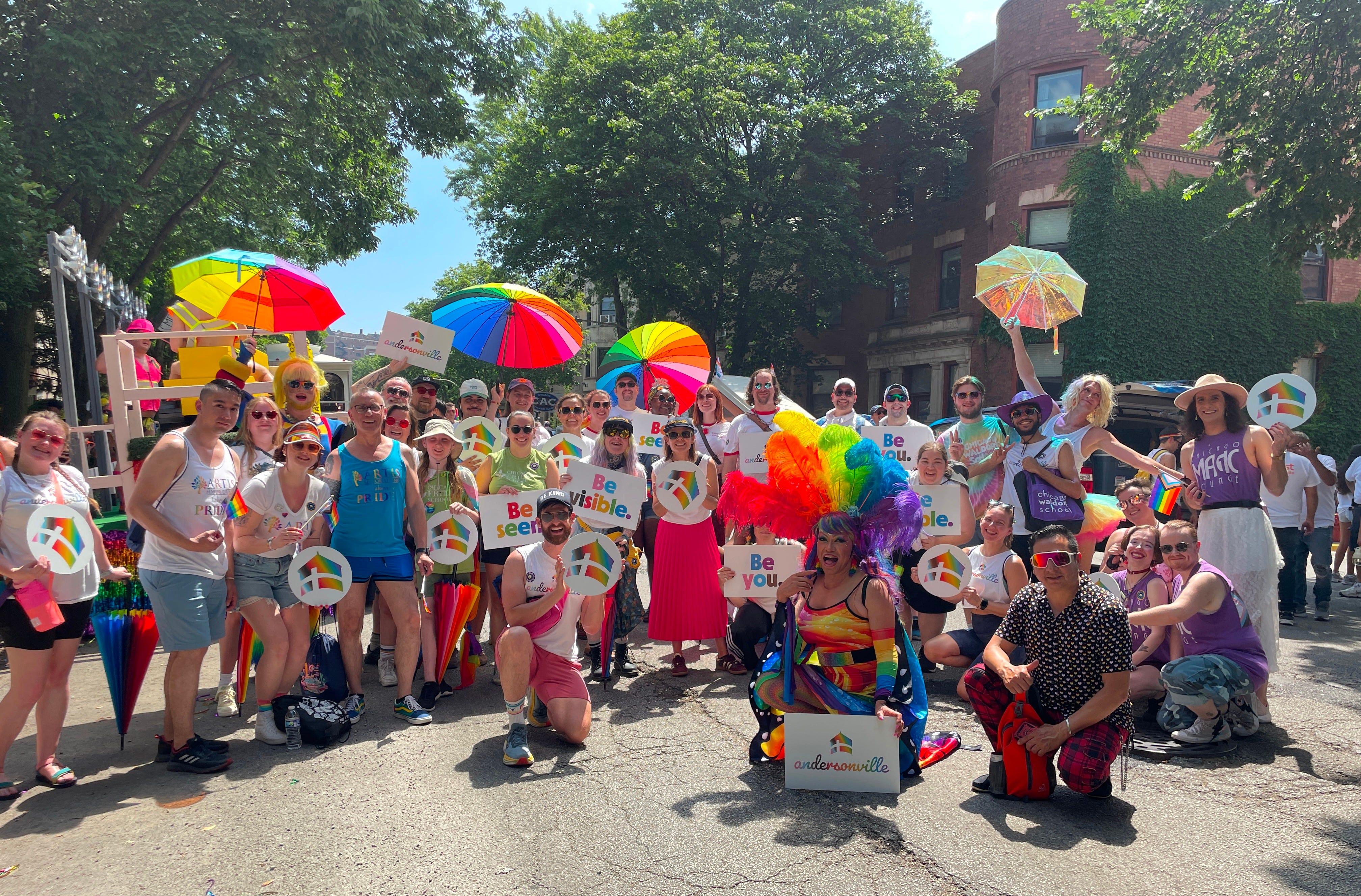
Now, the focus is finally changing. Even “Girlstown”, the nickname for Andersonville, has gone from being the city’s lesbian capital in the 90s to widening its arms to include trans, non-binary, and other gender diverse folks (as well as gay couples, families, and many more). In fact, Andersonville is one of the most diverse neighbourhoods in Chicago — home to every and all demographics, sexual orientations, gender identity, faiths, ethnicity, and status.
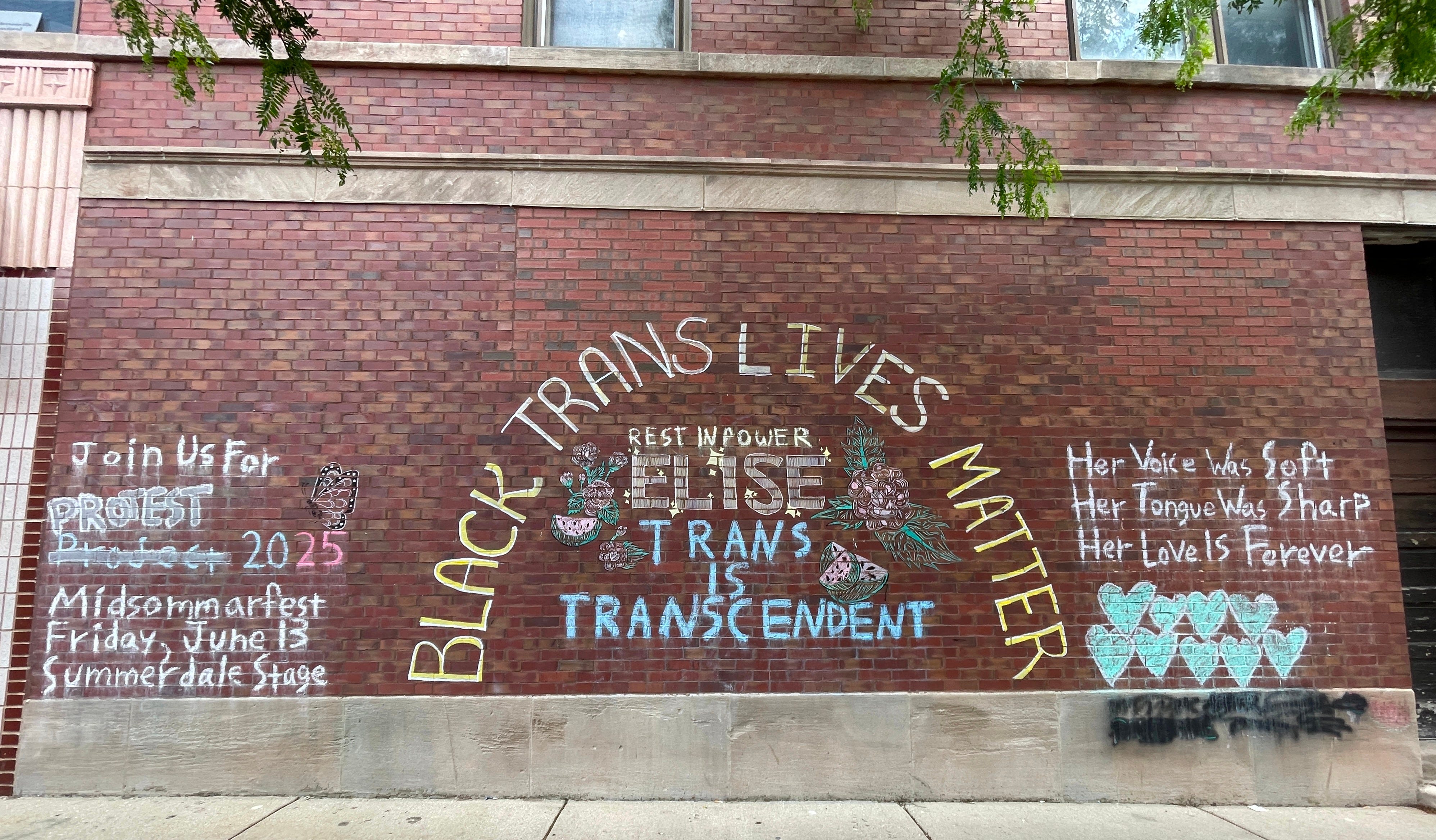
Chicago Pride is three days away when we meet in front of Women & Children First bookshop, CTC’s downstairs neighbour. A proud host of drag story hour and ‘banned book’ club, the bookshop is one of many spaces in Andersonville to keep pushing against the government’s erasure and demonisation of queer people.
When right-wing protesters threatened to besiege a drag story hour event at the Edgewater Branch of Chicago Public Library, the community came together.
“We had about 200 people at the counter-protest. Neighbours, business owners, organisations across the 48th ward.”
Drag story hour has gone “far beyond simply reading kids’ books”, Ladden adds. These events are “vital” to create inclusivity in the community that goes beyond gender and sexual orientation.
“They read books about religious inclusivity, cultural inclusivity, and international inclusivity. So it's very cool to have, for example, a Hanukkah candle lighting and a book read educating kids on how people celebrate the new year and the holidays all over the world.”
#HireTransNow
Studies have shown that trans people are twice as likely to experience unemployment than their cisgender peers, and are more likely to live in deprived areas as a result. CTC is at the helm of a campaign to flip the script, and increase employability in the trans community.
from CTC’s website: Our flagship campaign, Trans-Inclusive Chicago, focuses on uplifting Trans communities and challenges Chicago organizations to Get Trained, Get Feedback and Hire Trans Now.
CTC is only one of only two organisations in the U.S. working to boost trans employment (alongside TransCanWork, operating in California). TransCanWork mostly does workplace training, but they don’t have the “unique door-to-door approach” Trans-Inclusive Chicago is pioneering.
That’s supported by a job board linking employers and prospective employees, as well as visibility campaigns calling for more employers to get involved.
“Our #HireTransNow campaign is our call to action: for employers to get over their hesitation, to learn about the community, to hire trans people looking for work.”
The collective runs training of differing levels aimed at employers. From ‘101’ classes such as using correct honorifics, to how to create a gender-inclusive workplace.
Andersonville was one of the neighbourhoods which responded most positively. “It’s not that there was resistance from business owners to do this, they simply didn’t know this resource existed, and once they did…they were on board.”
“Part of our idea about cultural change is that you have to meet trans people. It needs to be local. You need to know that these trans people are your neighbours, they're your customers, they're your fellow business owners.”